
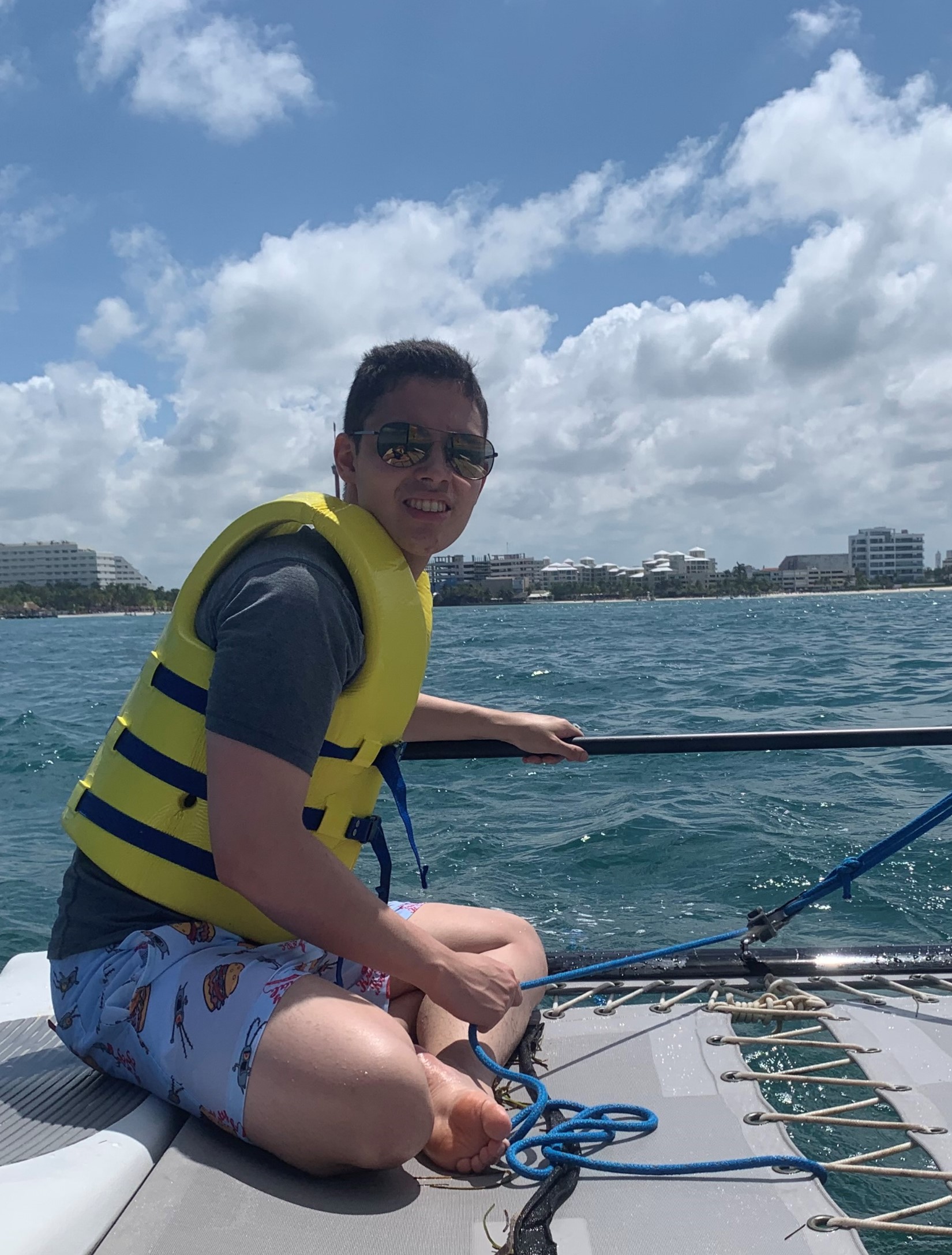
I am a 22 year-old engineering student from Manaus, Brazil, a big city in the middle of the Amazon Rainforest. As a senior double-majoring in Aerospace and Computer Engineering, I am curious about how technology can help to improve life on Earth and beyond. During my time at the University of Michigan, I am getting involved with research to develop safer systems for aerospace vehicles, and harnessing the power of quantum computers to solve CFD problems. As part of Michigan Aeronautical Science Association, I have designed rocket fins, contributed to the rocket flight prediction software and wrote firmware for the flight computer radio. I intern as a software engineer at AWS and Microsoft Azure. Passionate about culture and languages, I have studied abroad in Japan and lived, virtually due to the pandemic, in the Max Kade Haus, a German-speaking community at the University of Michigan.
As an aerodynamics engineer, I designed a sheet metal rocket fin prototype capable of enduring flutter at hypersonic speeds by conducting two-way Fluid-Structure Interaction simulation on Ansys. As a software developer, I contributed to our 6DOF flight prediciton software by introducing disperion analysis for Monte Carlo simulations, integrating trajectory plots with Google Earth and building a GUI interface for general rocket shapes. As an avionics engineer, I am currently writing the firmware library for the flight computer radio.
I work with Professor Jean-Baptiste Jeannin to develop a synchronous programming language with refinement types support. This research focuses on creating an environment where the source program can be directly verified. My main contribution was to modify the Zelus Language compiler to support refinement type annotation and to create an interface with Z3 SMT solver to check wether or not type declaration for functions and variables are valid. This project was recognized with the U-M STEM Research Carreer Award.
I developed an incident-response system to help security analysts investigate compromise machines in a large scale. The work was a collaboration between Microsoft Sentinel and the Microsoft Security Response Center. I also designed the user interface using Typescript and React. During this internship, my team won 2nd place in the internal Capture The Flag event and 3rd place on the intern puzzle solving event.
I worked on the Windows Kernel and Hypervisor Test Suite at the Base Platform Team. My project focused on optimizing VM creating and required working on user, kernel, and hypervisor modes on Windows. The project was developed in C, C++ and Assembly x86.
I introduced new customer-facing metrics for the Global Accelerator service. One set of metrics display the health status of EC2 instances, elatic IPs and load balancers linked to the accelerators. The other set displays TCP reset counts on upstream and downstream connections. This product was launched on October 2021, read more about it here.
I performed the digitization of 25 farms in Puerto Rico using ArcGIS and Google Earth to detect coffee crop management. I analyzed farm shapefiles on Google Earth Engine using Normalized Difference Vegetation Index to track crop recovery after Hurricane Maria. I wrote a script to detect potentially damaged areas in farms based on multispectral imagery. This project received the Blue Ribbon Award at the University of Michigan Undergraduate Research Symposium Winter 2020.
From Aerospace to Computer Science, Engineering to German, first-year to master's classes. I believe that exploring different areas is key to solve complex problems and become a better engineer. Here I list the classes I have taken.
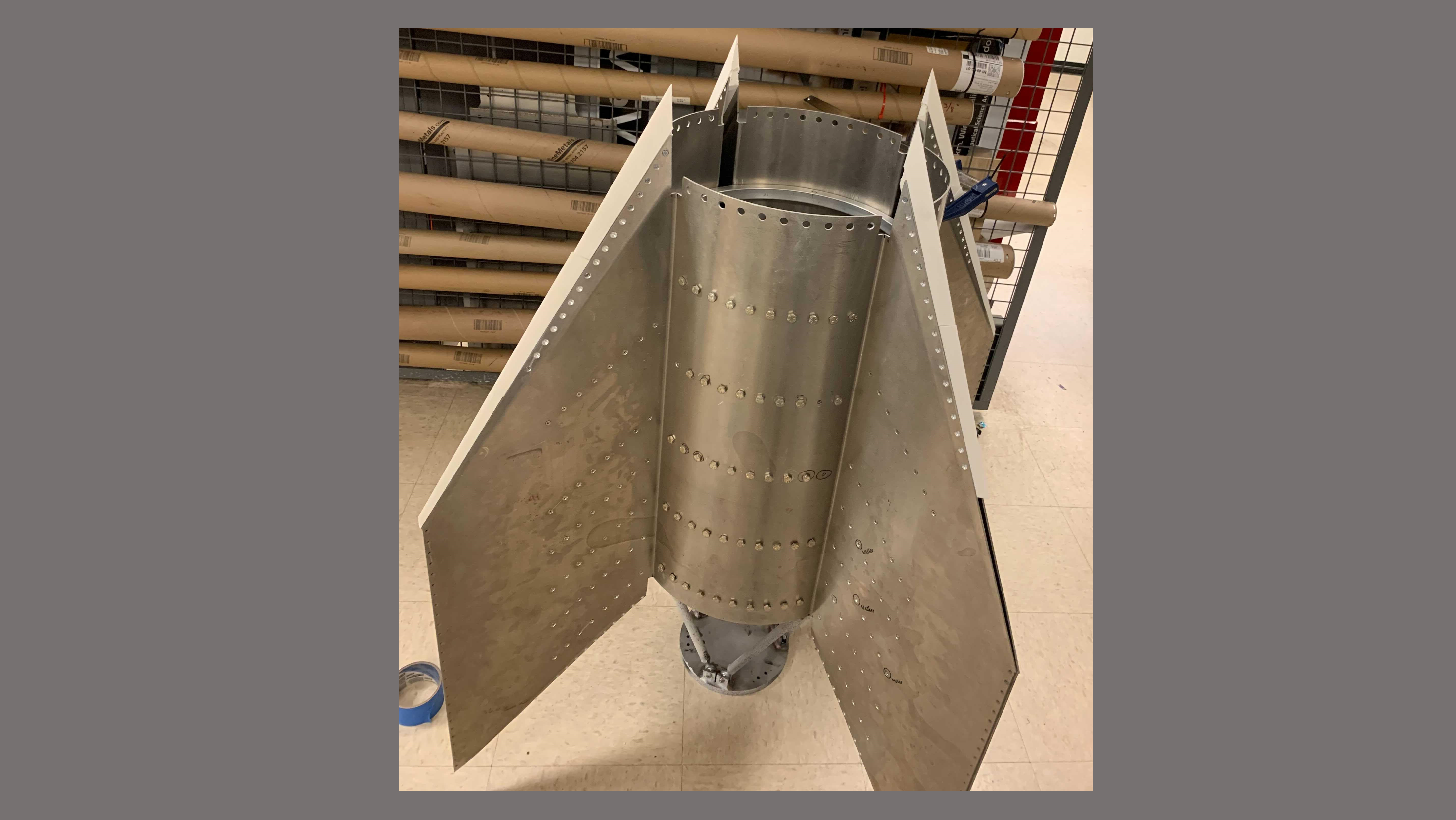
Performed structural and fluid analysis to design the rocket fins for the Tangerine Space Machine rocket.
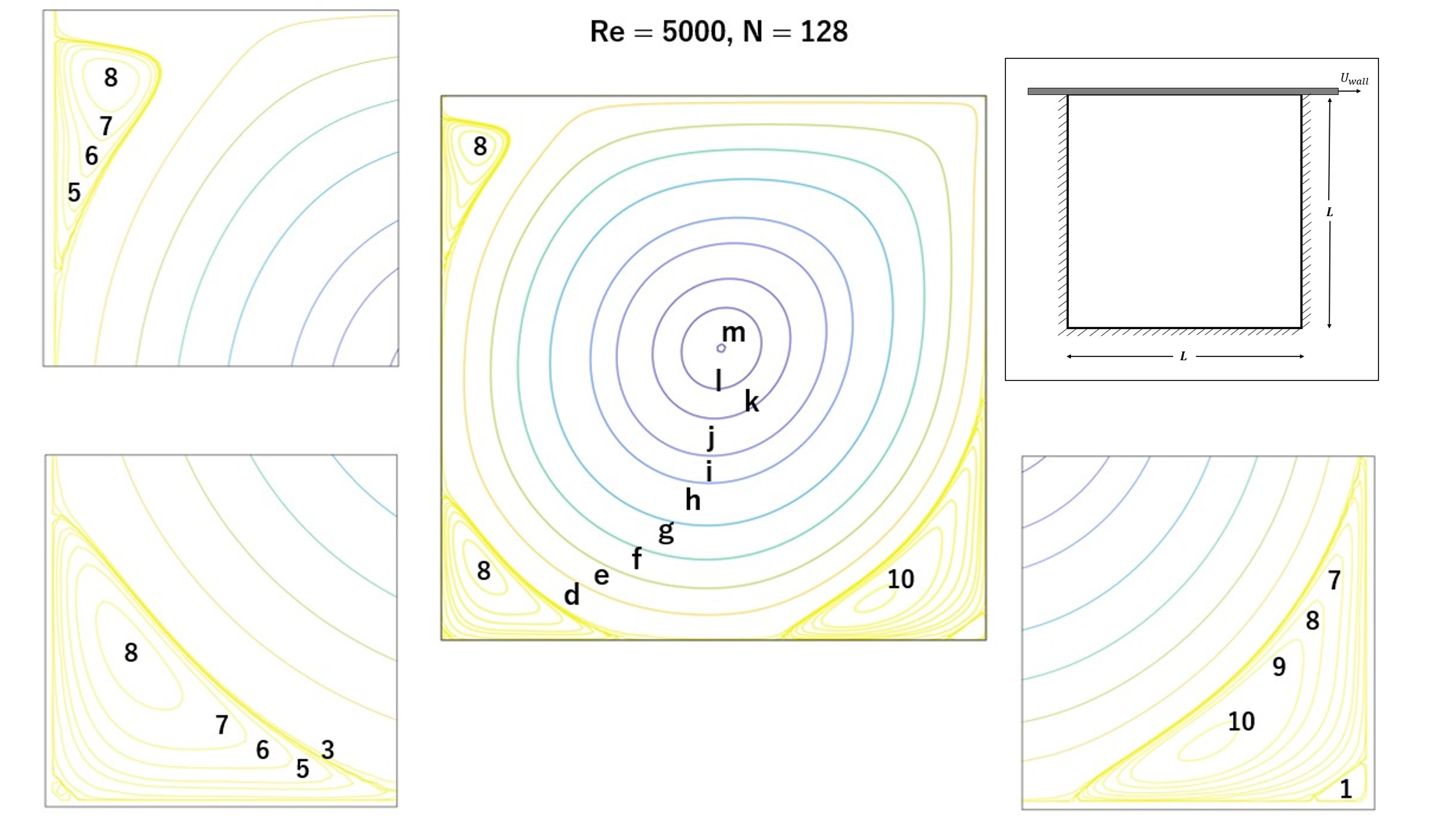
Driven-Cavity Flow Streamlines for N = 128 and Re = 500, inspired by Ghia et al (1982).
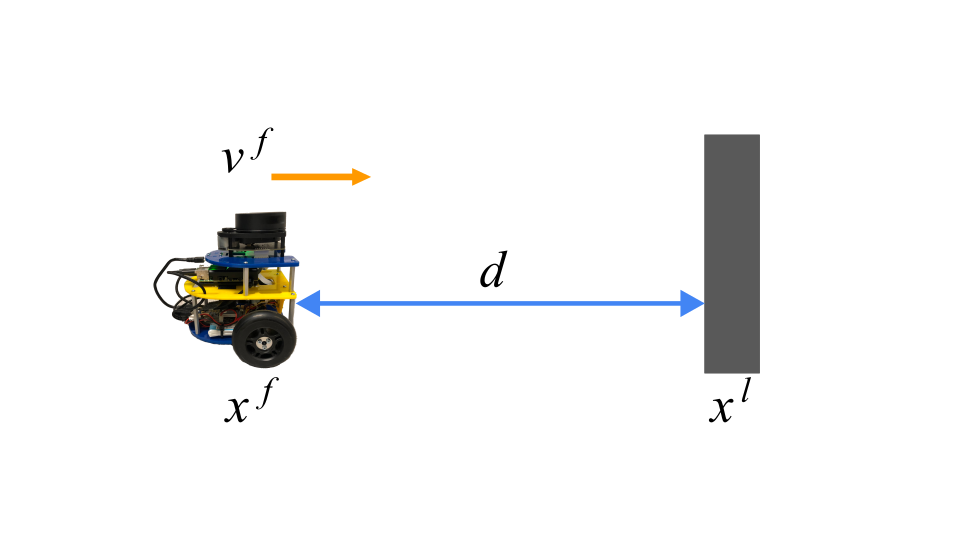
MARVeLus bridges the gap between simulation, execution and verification.
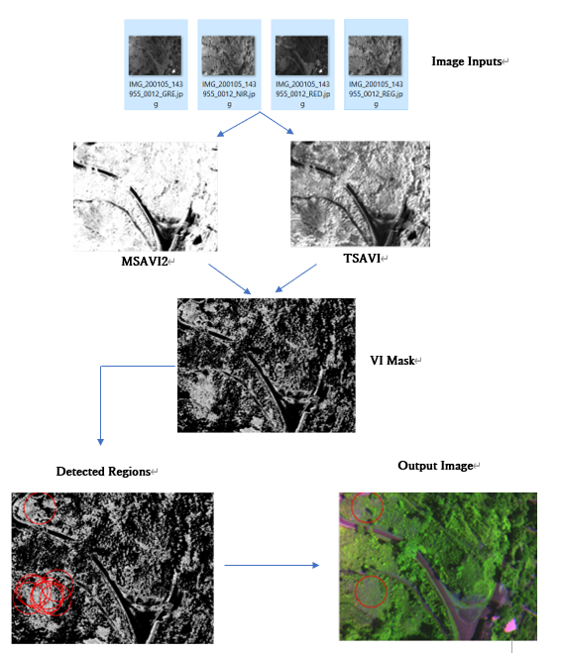
The detection algorithm enabled the NDVI analysis in Puerto Rican coffee farms after Hurricane Maria. Mayorga et al
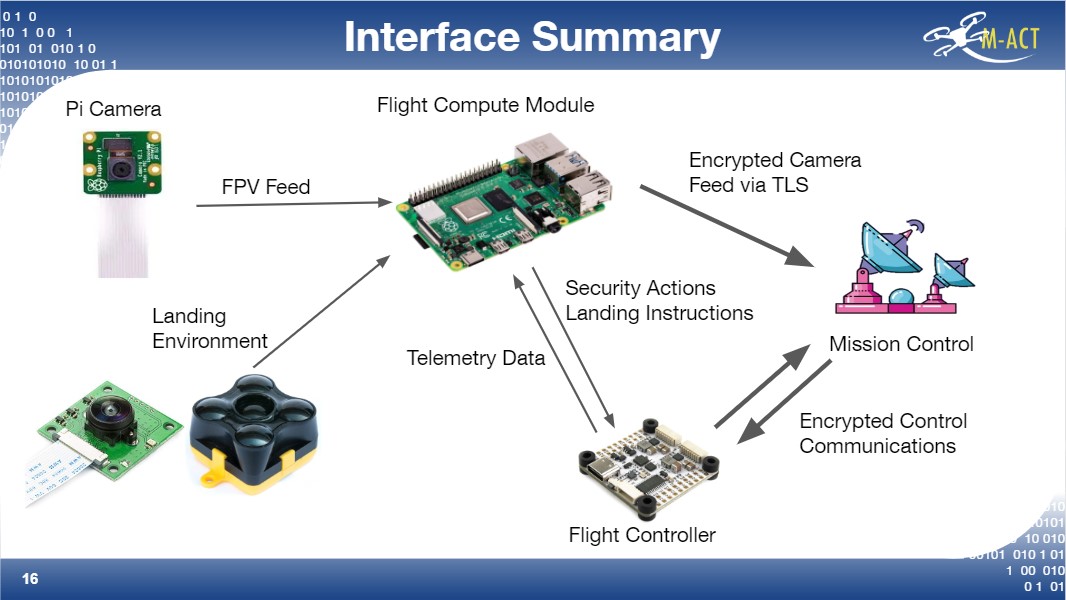
Interfaced a Raspberry Pi with a Lumenier Flight Controller to strengthen the security of a Vayu Knuclebuster Drone.
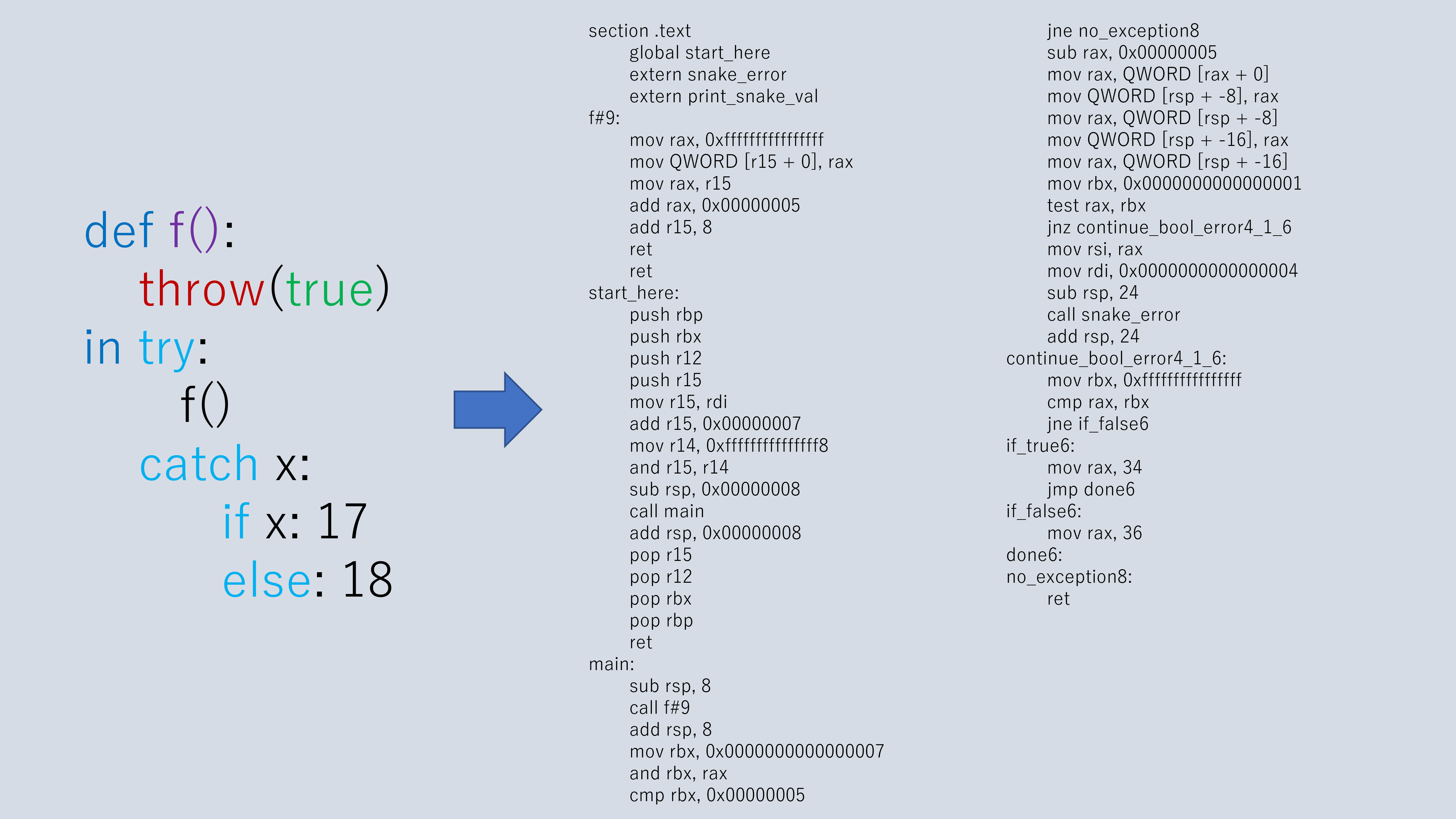
Garter is a scary snake language that supports exceptions. This was part of EECS 483 Fall 22 course at UMich.